New wet rooms
Preparation, falls, waterproofing and specialist tiling treated as one connected installation rather than separate finishing jobs.
Wet room installation in Warrington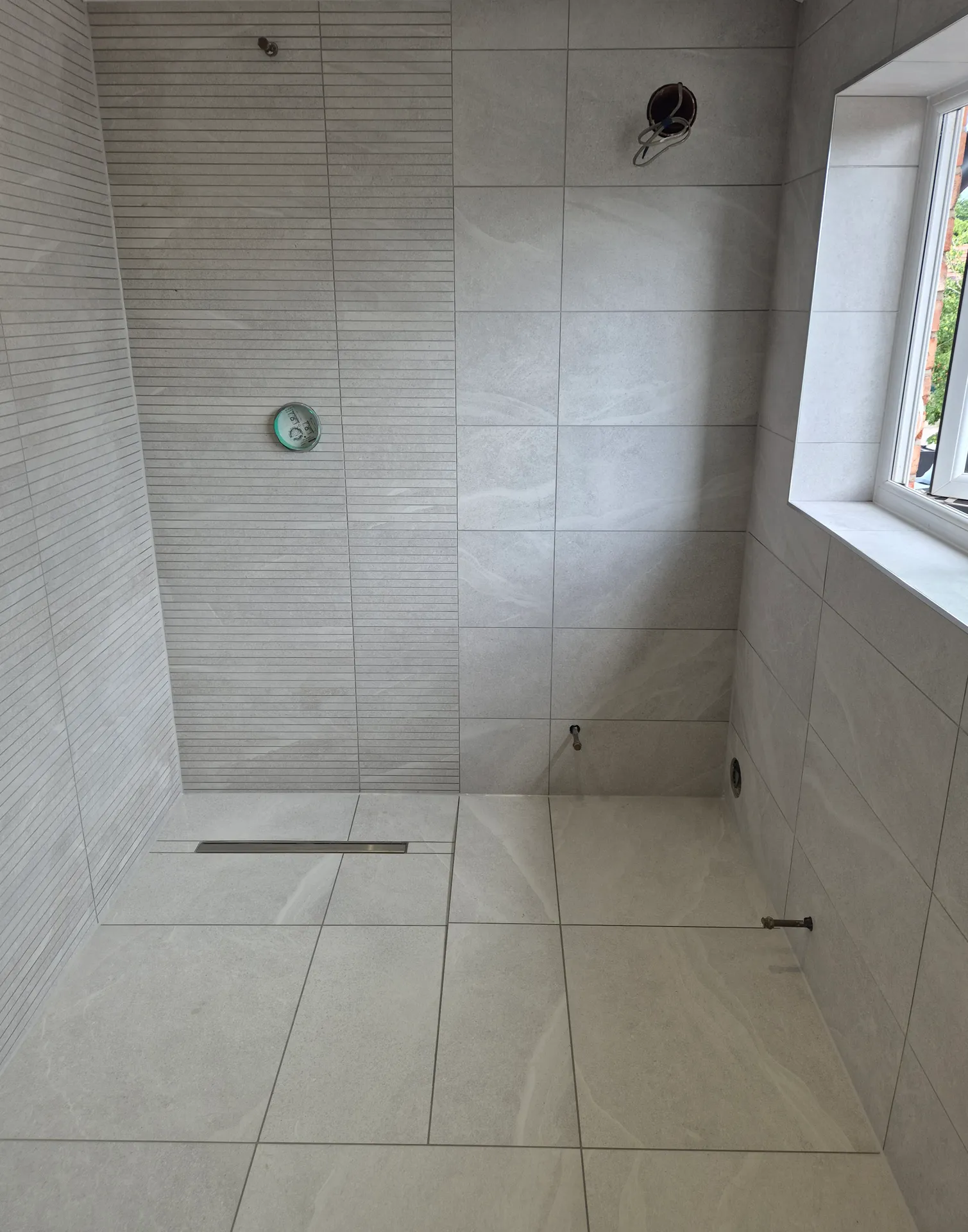
Warrington · Cheshire · South Manchester
The finished tiles are only the visible layer. A reliable wet room depends on what happens underneath: substrate, movement control, falls, waterproofing, drain integration and full tile support.
Approved Member
The Tile Association
5★ Google Reviews
Verified Reviews
23+ Years Experience
One Specialist Craft
Fully Insured
Public Liability
I specialise in the preparation, waterproofing and tiling side of wet-room construction. That includes new installations and remedial work where an existing tiled wet room has developed movement, cracking, loose tiles or water-ingress concerns.
Preparation, falls, waterproofing and specialist tiling treated as one connected installation rather than separate finishing jobs.
Wet room installation in WarringtonThe part nobody sees when the room is finished: substrate preparation, critical junctions, membrane continuity and integration around the wet-room area.
Why tiles alone are not waterproofCracking, movement, loose tiles or leaking can be symptoms of a deeper failure. I do not sell cosmetic patch repairs where the underlying installation needs proper investigation.
See a real Warrington rebuildCritical preparation and waterproofing can be photographed before it is permanently concealed, giving you evidence of how the wet room was built — not just pictures of the finished tiles.
How I document Warrington installationsWhat is underneath matters
Once the floor and walls are tiled, the important construction is hidden. That is why I put so much emphasis on preparation and documented build evidence: it shows the installation before the expensive porcelain covers it.
Ask any wet-room installer what is going underneath your tiles, how movement is controlled and how the waterproofing remains continuous at the vulnerable junctions. Those answers matter more than a glossy photograph.
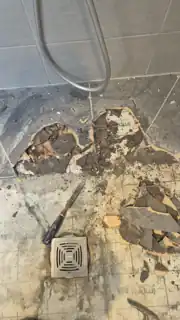
Real Warrington case study
A remedial project started with visible cracking and movement. Opening the installation exposed isolated adhesive pads, unsupported voids and the existing waterproofing arrangement. The rebuild was documented through strip-out, substrate work, waterproofing, tiling and completion.
Send photographs and a short description. For remedial work especially, the visible symptom is not enough to price or diagnose the construction underneath.
Discuss your wet room